
close
Choose Your Site
Global
Social Media


Views: 0 Author: Site Editor Publish Time: 2026-10-27 Origin: Site


Municipal contractors and project engineers face a harsh reality. The margin for error in public infrastructure is virtually nonexistent. Developing public assets demands decades of structural durability. You must manage tight budgets while adhering to strict local and federal regulations. Every single component, from towering retaining walls to heavily foot-trafficked pedestrian pathways, must perform flawlessly under continuous public use.
Recent industry analyses highlight a massive shift in urban planning. Municipalities are rapidly adopting accelerated construction methodologies and modular urban design. City planners can no longer afford months of road closures and traffic disruptions. This surging demand for rapid deployment makes off-site prefabrication the new standard. Consequently, specifying highly accurate custom concrete molds is more critical than ever to support this modern infrastructure model.
A recurring bottleneck in public works is the over-reliance on off-the-shelf formwork. Standard molds simply lack the adaptability required to meet unique geometric or structural demands. Picture a site crew attempting to force a rigid standard flat form onto a custom curved highway barrier. The inevitable result involves compromised joint seals, cement slurry leakage, and extensive manual labor for on-site patching. These structural compromises threaten the integrity of the entire public asset.
The definitive solution to these costly field modifications is the strategic utilization of engineered custom formwork. Whether your project requires heavy-duty steel or lightweight polymers, specifying the correct mold ensures exact dimensional tolerances. This comprehensive guide walks you through the exact engineering steps, material considerations, and regulatory requirements needed to successfully execute your next municipal infrastructure project.
Material Selection is Foundational: Choosing the appropriate fabrication material directly dictates production efficiency. Lightweight plastics excel in intricate repetitive casting, while heavy-gauge steel is mandatory for massive load-bearing elements.
Precision is Non-Negotiable: Strict adherence to exact dimensional tolerances, calculated draft angles, and reliable demolding mechanisms prevents concrete flashing and structural failure.
Regulatory Compliance First: Municipal infrastructure is heavily scrutinized. Projects require strict adherence to local Department of Transportation guidelines, accessibility requirements, and evolving environmental regulations.
Early Supplier Integration: Engaging an experienced manufacturer during the initial design phase mitigates risk, reduces prototyping costs, and ensures the final tooling meets all public safety standards.
Public infrastructure projects rarely conform to a convenient template. Standard concrete forms are manufactured for broad applications like basic residential foundations. They inherently lack the specialized configurations required for bespoke city features. When contractors attempt to modify standard molds on-site to fit specialized drainage systems, they introduce significant risks. These field modifications often lead to dimensional inaccuracies and weak concrete joints.
Investing in custom tooling provides engineers with complete design authority. It ensures that every cast element integrates seamlessly with existing municipal topography. Furthermore, specifying high-quality precast concrete molds offers substantial long-term cost savings through high reusability. By engineering a mold specifically for a required volume, the initial tooling cost is amortized across thousands of pours. This drastically drives down the cost-per-unit.
The versatility of custom formwork extends across virtually all sectors of public works. Common applications include massive bridge piers, highway median barriers, bespoke paving stones, tactile indicators, modular utility vaults, and accessible public seating.
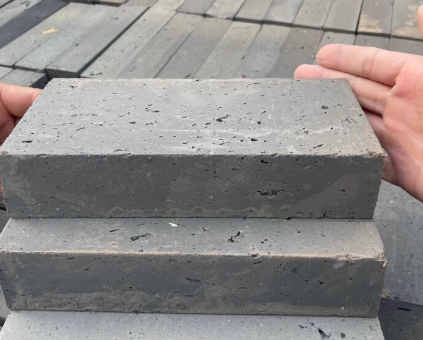
Selecting the optimal mold material requires a highly technical evaluation. You must analyze the project volume, geometric complexity, and overall budget constraints.
Engineering-grade plastics have become highly efficient material choices for specific municipal applications. The primary advantages include a lightweight nature, immunity to rust, and exceptional cost-effectiveness for high-volume production runs. Plastic is particularly advantageous when a project requires intricate architectural details.
Take street pavement and tactile indicators, for example. Specifying custom plastic concrete molds made from high-density polypropylene ensures exact interlocking joints. High-quality customizable floor tile injection molds feature precise interlocking tabs and reinforced ribbing on the back. This specific engineering prevents warping under the weight of wet concrete. It guarantees that paving stones align perfectly on site without requiring heavy lifting equipment. The material flexibility also aids in the demolding process, reducing the risk of edge chipping.
When municipal projects involve heavy-duty structural elements, steel remains the undisputed industry standard. Steel molds offer unparalleled rigidity. They easily withstand the immense hydrostatic pressure generated by massive load-bearing columns and bridge abutments. While the upfront fabrication costs are higher, a well-maintained steel mold endures thousands of casting cycles without any dimensional degradation.
Fiberglass serves a highly specialized role. It is frequently specified for complex architectural curves and bespoke structural shapes that would be cost-prohibitive to machine from steel. Polyurethane is the preferred material for flexible form liners. These liners are placed inside rigid outer molds to impart deep textured finishes onto highway sound barriers.
Material Type | Best Suited For | Expected Lifespan | Relative Initial Cost |
|---|---|---|---|
Injection-Molded Plastic | Interlocking pavers, tactile indicators, intricate details | 100 - 500+ Pours | Low to Medium |
Heavy-Gauge Steel | Bridge abutments, retaining walls, high-pressure pours | 1,000 - 5,000+ Pours | High |
Fiberglass | Architectural curves, domes, large bespoke shapes | 50 - 200 Pours | Medium to High |
In municipal engineering, precision dictates safety. When drafting requirements, engineers must define strict dimensional tolerances down to fractions of a millimeter. If your joint tolerance is off, cement slurry bleeds out during the pour. This causes honeycombing on the finished surface. Misalignment in the mold geometry translates directly to alignment issues during the final installation. In infrastructure where structural load paths must be perfectly aligned, such deviations are completely unacceptable.
A perfectly dimensioned mold is useless if the cured concrete cannot be safely extracted. Specifying the correct draft angle is a critical requirement. A slight taper applied to the vertical walls typically one to three degrees reduces friction between the concrete and the mold surface during extraction. Without appropriate draft angles, the vacuum effect created during lifting will cause the fresh concrete to crack. Specifications should also detail integrated demolding mechanisms like compressed air release valves.
Municipal concrete elements house complex internal frameworks. The mold specification must account for the precise placement of internal hardware. Engineers must specify block-outs for utility conduits and magnetic mounting points within the mold to securely hold rebar cages in place. Failure to secure these elements during the high-vibration pouring process leads to exposed rebar.
Infrastructure projects intersecting with roadways must comply strictly with Department of Transportation standards. When specifying molds for median barriers, the forms must produce elements that meet rigorous crash-test ratings. The specifications must ensure the mold can handle specific high-strength concrete mixes mandated by federal guidelines to guarantee public safety under impact conditions.
Accessibility is a legal mandate in all municipal planning. Molds used for public walkways and transit stations must be engineered to comply with the Americans with Disabilities Act. This involves specifying molds that accurately produce tactile paving with exact spacing and height requirements. Molds for accessible curbs must maintain precise gradient tolerances without deflection during the pour.
Modern municipalities increasingly mandate sustainable construction practices. This shift directly impacts mold specifications. The formwork must accommodate eco-friendly concrete mixes utilizing supplementary cementitious materials like fly ash. These sustainable mixes often have different heat generation profiles compared to traditional cement. The chosen mold material must remain chemically compatible with these mixes.
The specification process always begins in the digital environment. Project engineers collaborate with mold manufacturers to develop comprehensive three-dimensional models. This phase includes conducting finite element analysis to simulate the pouring process. By evaluating how the mold handles hydrostatic pressure, teams identify potential stress concentrations before any physical material is cut.
Before authorizing mass production, it is imperative to specify a prototype run. A prototype allows for a first article inspection where the initial concrete cast is rigorously measured against the original specifications using laser scanning. Specifying this step ensures that any necessary adjustments to the joint sealing mechanisms are made prior to full-scale manufacturing.
A robust specification document must include comprehensive quality control checklists. These dictate the standard to which the manufacturer will be held. Specifications should detail acceptable surface finish requirements, joint tightness tolerances to prevent grout leakage, and load-testing protocols.
Budgeting for custom concrete molds requires analyzing costs well beyond the initial purchase price. Custom tooling inherently carries higher upfront engineering costs compared to standard forms. However, the financial justification lies in the return on investment generated through reusability. A highly engineered durable mold drives down the cost per pour. When a municipality amortizes the initial tooling cost over repetitive casts, the custom solution proves far more economical.
To realize the projected return, the molds must survive their intended lifecycle. Specifications should clearly outline maintenance protocols. This includes detailing the precise chemical release agents compatible with the mold material. Incorrect agents cause plastic to become brittle or steel to corrode. The specification must also address UV protection for plastic molds during off-season storage.
Not all fabricators possess the capability to meet municipal standards. It is critical to select a manufacturer with a proven history of fulfilling government contracts. Manufacturers experienced in public works understand the stringent material certification and inspection processes required by municipal oversight committees. Their familiarity with transportation compliance significantly reduces the administrative burden on your team.
Fragmented supply chains increase the risk of miscommunication and costly delays. The most efficient procurement strategy involves partnering with a manufacturer that controls the entire process under one roof. Facilities offering comprehensive services from initial design to final physical fabrication eliminate communication breakdowns. A full-service partner rapidly iterates designs and implements changes directly on the production floor.
Successful municipal infrastructure projects rely on exact precision, material suitability, and strict regulatory compliance. All of these critical factors stem directly from properly specified formwork. A well-engineered custom mold is not just a construction accessory; it is a vital infrastructure investment that improves safety and long-term durability. Stop compromising your city projects with inadequate standard molds. Equip your site crews with the right tools for the job. To explore highly precise, durable tooling solutions tailored to your specific project requirements, visit Wangzu Formworks and ensure your next municipal build is a total success.
Lead times typically range from four to twelve weeks. This timeframe depends heavily on the geometric complexity of the design, the chosen fabrication material, and the duration of the engineering and prototyping phases.
Plastic is the optimal choice for projects requiring intricate surface designs, lighter weight for easier handling without cranes, and high-volume production of smaller elements. It is highly recommended for interlocking street pavers and tactile indicators.
Reusability is entirely dependent on the material and maintenance protocols. High-quality plastic molds withstand hundreds of pours if properly maintained. Heavy-duty steel molds engineered for massive structural elements reliably last for thousands of casting cycles.
Yes. The chemical composition of the release agent must be explicitly matched to the mold material. Using an incompatible agent degrades plastic polymers, corrodes steel frameworks, or results in a pitted surface finish on the cured concrete.
Immediate cleaning after demolding is crucial to prevent concrete buildup. Always apply the manufacturer-recommended release agent before every pour. For steel molds, apply rust inhibitors before long-term storage. For plastic molds, store them flat in a climate-controlled environment away from direct UV exposure to prevent warping and brittleness.
The material of the custom mold directly affects heat retention during the hydration process. Steel molds dissipate heat quickly, which might require thermal blankets in colder climates. In contrast, heavy-duty plastic or polyurethane molds retain heat better, potentially accelerating the initial curing phase for specific concrete mixes.
The most effective strategy is to collaborate closely with licensed structural engineers and a mold manufacturer experienced in public works. This ensures that load ratings, accessibility standards, and specific material tolerances are integrated directly during the initial design phase.


