
close
Choose Your Site
Global
Social Media


Views: 0 Author: Site Editor Publish Time: 2026-02-04 Origin: Site


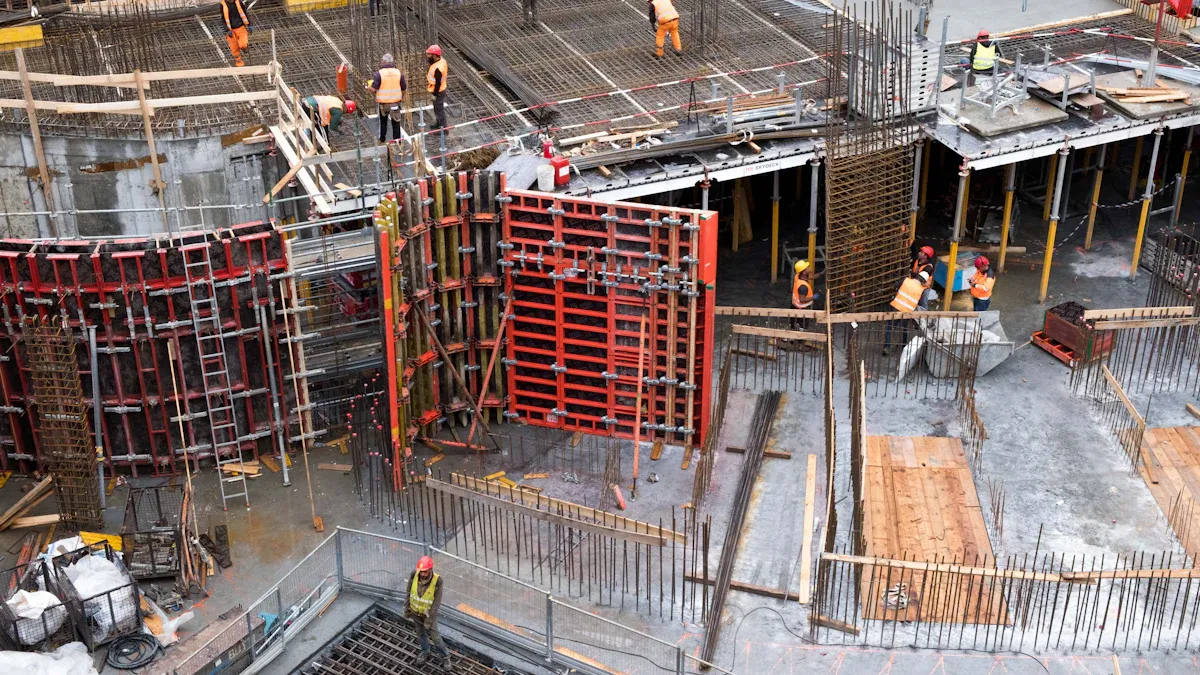
Formwork in construction works like a mold for concrete. You use formwork to keep wet concrete in place. It stays there until the concrete gets hard. This helps you build strong walls, columns, and slabs. Formwork gives each part its right shape and look. Different materials have their own good points for formwork.
Material | Advantages |
|---|---|
Steel Formwork | Lasts long, can be used again, smooth finish |
Timber Formwork | Works well, needs care so it does not bend |
Plastic Formwork | Light, simple to use, can be used again |
MDO Plywood | Tough, keeps out water, saves money |
You need formwork to make sure every project is strong and good quality.
Formwork is like a mold for concrete. It helps the concrete keep its shape until it gets hard. This is important for making strong buildings.
There are different materials for formwork, such as timber, steel, and plastic. Each material has its own good points. Pick the material based on what the project needs, how much money you have, and how you want it to look.
It is very important to put formwork in the right way and take it off carefully. Always make sure it is straight. Wait for the concrete to get hard before removing the formwork. This helps stop cracks and weak spots.
Using formwork again can help save money and make less trash. Materials like aluminum and plastic are good for projects that last a long time.
Safety is very important in construction. Always follow the rules and wear safety gear. Make sure everyone on the team knows how to stay safe to stop accidents.
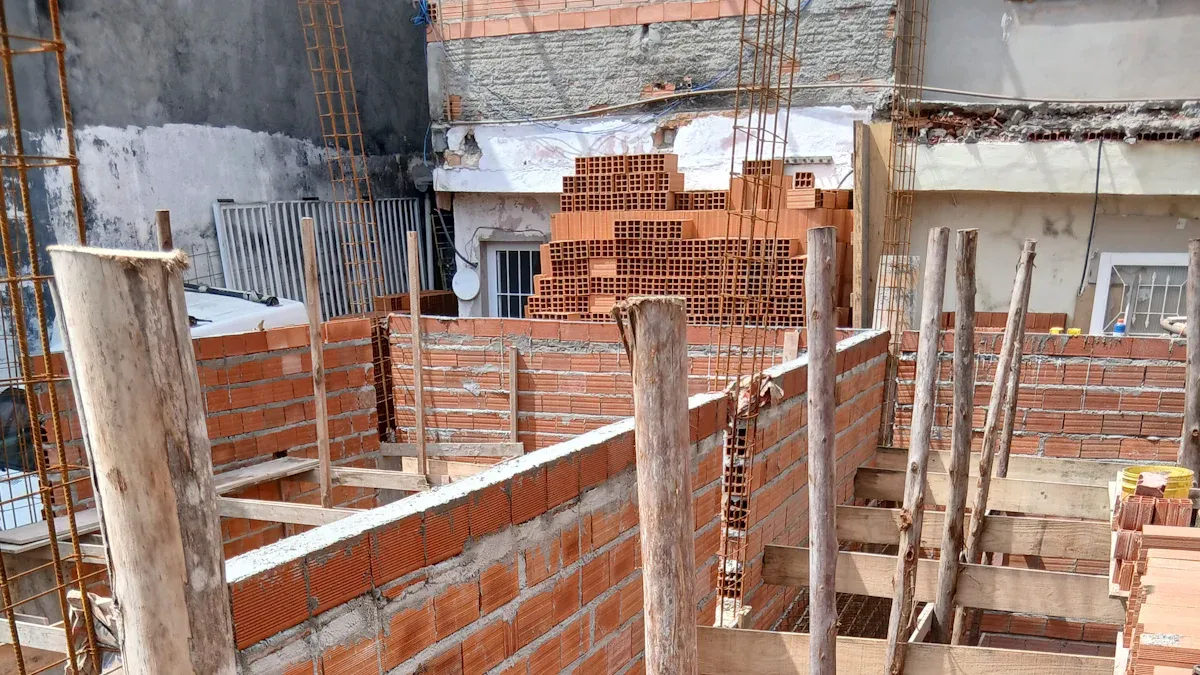
When you start a concrete job, you must pick the right formwork. Each formwork system uses different materials. Some work best for certain jobs. Some are temporary and get removed later. Others stay in place after the concrete dries. Here is a quick way experts sort formwork:
Classification Criteria | Types of Formwork |
|---|---|
By Material | Wood, Steel-Wood, Plywood, Steel, Steel-Bamboo, Plastic, Fiberglass, Aluminum Alloy |
By Structure Type | Basic, Column, Beam, Floor, Stair, Wall, Shell, Chimney Formworks |
By Construction Method | On-site Assembly, Fixed, Mobile Formworks |
You see timber formwork a lot on small building sites. This type uses wood boards or plywood to shape concrete. Timber is simple to cut and carry. You can make special shapes for cool designs. You do not need fancy tools or lots of skill to use timber formwork. It is a smart pick for small budgets or when you need something fast.
Tip: Timber formwork works well for special shapes or small jobs where you need to change things easily.
Here are some main facts about timber formwork:
You can use timber formwork about 5 to 7 times before it breaks down.
Timber is cheap and easy to find.
You can use it for houses and small business buildings.
Treated timber can make concrete look nice and smooth.
Advantage/Application | Description |
|---|---|
Cost-Effective | Timber costs less than other materials, so it is good for small budgets. |
Ease of Handling | It is light and easy to cut, so you can shape it at the site. |
Flexibility | You can make almost any shape or size you want. |
Availability | Wood is easy to get, so you do not wait long for supplies. |
Typical Applications | Used in homes and small business projects. |
Steel formwork is strong and lasts a long time. You use it when you want a smooth finish and to reuse the formwork many times. Steel panels do not bend or twist. Your concrete walls and columns come out straight and even. This type is great for big jobs, like tall buildings or bridges.
Steel formwork can be used up to 100 times.
It gives a smooth surface, so you do not need much extra work.
You get better safety and steady work areas.
The first cost is more than timber, but you save money if you use it a lot.
Benefit | Description |
|---|---|
Strength and Durability | Steel keeps its shape even with heavy loads. |
Cost-Effectiveness | You save money over time because you can use it again and again. |
High-Quality Surface Finish | Concrete looks smooth, so you do not need much extra work. |
Efficiency and Time Savings | You finish big jobs faster with steel formwork. |
Safety and Stability | Steel formwork gives you a safe and steady work area. |
Note: Steel formwork costs more at first, but it is a smart choice for big or repeated construction jobs.
Aluminum formwork is light but still strong. You can move and set up the panels fast, even without big machines. This formwork is good for jobs where you pour the same shape many times, like apartments or housing projects.
Aluminum formwork weighs about one-third as much as steel.
One person can carry big panels, so you save time and work.
You can use aluminum formwork up to 300 times.
The panels fit together well, so your concrete walls look smooth.
Tip: Aluminum formwork helps you finish projects 30–40% faster than old ways.
You pay more at the start for aluminum, but you save on work and finish jobs sooner. This makes it a good pick for fast building.
Plastic formwork is a new choice for many concrete jobs. You can use it for houses, offices, factories, and even bridges. Plastic panels are light, easy to clean, and do not soak up water. This means they do not swell or rot like wood.
Advantage | Plastic Formwork | Traditional Materials (e.g., Wood) |
|---|---|---|
Lifespan | Reusable 30-100+ times | Discarded after 5-8 uses |
Moisture Resistance | No swelling or rot | Can swell, deform, or decay |
Maintenance | Easy to clean with water | Needs scraping and more care |
You can use plastic formwork for many types of building:
Homes
Offices
Factories
Bridges and tunnels
Special shapes, like pools or curved walls
Plastic formwork is a good pick when you want low care and high reuse.
Fabric and fiberglass formwork give you new ways to shape concrete. You can use these materials to make curves, waves, or other cool designs. Fiberglass is light and strong. It does not rust or rot, so you can use it in tough weather or chemical places.
Fiberglass formwork is easy to move and set up.
It lasts a long time and uses less raw material.
You can make special shapes for creative buildings.
It does not carry electricity and fights off chemicals and water.
Feature | Contribution to Architectural Design |
|---|---|
Design flexibility | Lets you make tricky shapes and forms |
Aesthetic capabilities | Helps you get smooth finishes and cool looks |
Durability | Lasts longer in busy or rough places |
Surface definition | Gives great texture for fancy finishes |
Compatibility with insulation | Makes buildings save more energy |
Note: Fabric and fiberglass formwork help you build creative and modern concrete structures that stand out.
You can see that each formwork system has its own strengths. When you pick the right one, you make your building project safer, faster, and cheaper. Temporary types like timber or plastic are good for short jobs, while steel, aluminum, and fiberglass work well for big or repeated projects. Always match your formwork to your concrete needs and project goals.
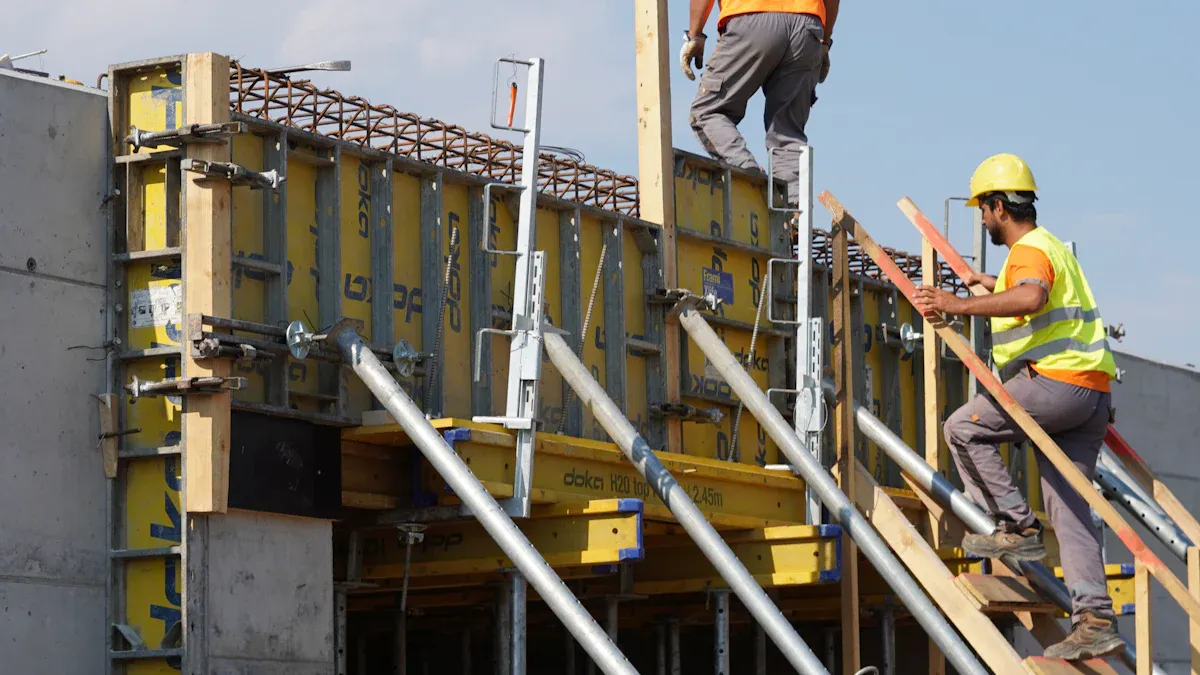
You start building concrete forms by planning the shape and size of your structure. You need to measure and mark the area where you want to place the formwork. Use a tape measure and chalk to outline the boundaries. Make sure everything is level and straight.
To build concrete formwork for stairs, follow these steps:
Mark the stair location. Use stakes and chalk to show where the formwork will go.
Calculate the step height and width. Standard step height is about 6 to 7 inches. Step width should be at least 10 inches.
Divide the total height by the step height to find out how many steps you need.
Use the formula: 2 times step height plus step width equals 24 to 25 inches. This gives you comfortable stairs.
Choose lumber like 2x4 or 2x6 for the frame.
Cut risers from plywood or 2x4. Attach them to the side panels. Make sure they stand straight and secure.
Cut treads for each step. Place them on the risers. Level and fasten them tightly.
Use nails or screws to connect risers and treads to the side panels. Check alignment with a level to avoid grout leaks.
Add supports like 4x4 posts or metal braces. These hold the formwork steady and support the weight of the concrete.
Apply wax or oil to the inside of the formwork. This stops concrete from sticking and makes removal easier after 24 to 48 hours.
You need basic carpentry skills, especially when you work with timber formwork. Good carpentry helps you avoid common mistakes in concrete forming, like crooked walls or uneven surfaces. When you build concrete formwork, always check your measurements and alignment.
Tip: Creating sturdy concrete formwork starts with careful planning and precise cutting. Double-check your measurements before you pour concrete.
You install formwork by first checking all materials for damage or wear. Pick strong, reusable materials like steel, aluminum, or plastic formwork. Use adjustable braces, cross braces, or tie rods to make the structure stronger. Seal joints with rubber washers or foam strips to stop grout from leaking.
When you pour concrete, manage it in smaller sections. This prevents overloading the formwork. Wait until the concrete gains enough strength before you remove the forms. If you strip the formwork too early, you risk cracks and weak spots.
Follow these steps for safe installation and removal:
Inspect materials before you start.
Use braces and tie rods for extra support.
Seal all joints tightly.
Pour concrete in small units.
Wait for the concrete to set before removing formwork.
Remove load-bearing supports first.
Use form release agents to make removal easier.
Clean and store formwork properly after use.
Train workers and follow safety rules.
Check everything before the first concrete pour.
Proper formwork keeps your concrete forming safe and efficient. It helps you maintain the shape, finish, and strength of your structure during curing.
Note: Building concrete forms with care improves construction quality and reduces waste.
You may face several challenges when you use formwork on site. Misalignment can cause crooked walls or uneven surfaces. Leaking forms can lead to weak concrete and visible flaws. Timing is important. If you remove formwork too soon, the concrete may crack or break.
Here are some common challenges and solutions:
Improper alignment: Check your panels often. Use sturdy formwork systems to fit panels precisely.
Leaking forms: Seal joints tightly. Use leak-proof locking mechanisms for a clean pour.
Formwork stripping issues: Wait until the concrete reaches enough strength. Use form-release agents to prevent sticking.
Difficulties in gang form removal: Remove forms at the right time and use proper techniques.
Misalignment and leaks: These problems can create weak points and degrade the surface finish.
You can solve these problems by cleaning the surface, applying release agents, and using vibrating tools for dense areas. Moisten the shuttering before pouring concrete if the drop height is more than 2 meters. Control the demoulding time based on test results. Strengthen management during pouring and removal. Make sure joints are tight and panels are flat.
Callout: Always check your formwork for alignment and leaks. Small mistakes can lead to big problems in construction.
Proper formwork helps you avoid common mistakes in concrete forming. It keeps your concrete strong and your construction safe. When you focus on building concrete forms with care, you improve the quality and durability of your project.
When you pick formwork, look for good quality and strength. Good materials help the concrete keep its shape as it dries. Plywood that is strong will not bend and gives a smooth finish. Strong formwork holds up the heavy concrete and keeps the building safe. Check if the formwork is flat and does not have any damage. If your formwork is tough, you can use it again and again. This saves you money and time. Some formwork lets water and air out. This helps stop cracks and makes your building last longer.
The height and shape of your building change what formwork you need.
How fast you pour concrete and how much pressure it has are important for safety and quality.
Pick materials that fit your project.
You need to think about cost when you choose formwork. The kind of material you use changes the price. Timber costs less, but steel and aluminum cost more at first. If your design is tricky, you need special formwork. This means you pay more for work and materials. Big jobs and long projects cost more money. Prices can go up or down depending on the season. Good formwork costs more but lasts longer and needs fewer repairs.
Cost Factor | Description |
|---|---|
Type of Material | What you use changes the price, from timber to good plywood. |
Design Complexity | Hard designs need more work and materials. |
Labor Costs | Skilled workers and where you build change the cost. |
Project Size and Duration | Bigger and longer jobs cost more. |
Time of Year | Prices go up and down with demand. |
Quality of Formwork | Better formwork costs more but saves money later. |
Regulatory Compliance and Permits | Rules may mean you need special materials or ways to build. |
Safety is very important in construction. You should always follow the best rules for using formwork. Wear safety gear like hard hats and gloves. Check all your materials for problems before you start. Keep your work area clean so no one slips or trips. Follow the maker’s steps for putting together and taking apart formwork. Wait until the concrete is dry before you take off the formwork. Use cranes for heavy pieces and make sure your team knows what to do. Have safety meetings often so everyone remembers the rules.
Tip: Talking and planning well helps stop accidents and keeps your project moving.
Good formwork helps you build faster and saves materials. You can use some formwork, like aluminum or plastic, many times. This saves money and is better for the planet. Using formwork again means you throw away less and helps green building. Strong formwork gives you the same good results each time and fewer mistakes.
Using formwork again helps lower pollution from building.
Aluminum and plastic can be used again or recycled.
You save money over time and finish jobs faster.
You are important for good concrete construction. The right formwork keeps concrete strong and safe. It also makes the surface smooth. Here is how formwork helps your project:
Key Aspect | Explanation |
|---|---|
Structural Integrity | Good formwork holds concrete in place and stops mistakes. |
Surface Finish | Quality formwork gives you flat, smooth concrete. |
Cost-Effectiveness | Planning well saves money and avoids big errors. |
Check your formwork for damage every time.
Teach your team to follow safety rules.
If you pick the best formwork and use smart steps, you build better concrete and safer sites.
You use formwork to hold wet concrete in place. It shapes the concrete and keeps it steady until it gets hard. This helps you build strong and safe structures.
You can reuse formwork if you keep it clean and check for damage. Materials like steel, aluminum, and plastic last longer and work well for many projects.
You check all parts for cracks or wear. You use strong supports and follow safety rules. You wait until the concrete is firm before removing the formwork.
Timber formwork works well for small jobs. You can cut wood easily and make special shapes. It costs less and fits simple construction needs.
If you take off formwork before the concrete is ready, you risk cracks and weak spots. Always wait for the concrete to set fully.

